Landing Pages That Convert: The Complete Guide for Small Businesses (2026)
More Traffic Doesn't Always Mean More Customers
Many businesses assume that if they could just get more visitors to their website, they'd generate more sales.
But that's not always true.
Imagine two businesses. Both receive 1,000 website visitors each month. The first website asks visitors to browse through several pages before they can find what they're looking for. The second sends visitors directly to a page focused on one service with one clear action.
Same traffic. Very different results.
That's the purpose of a landing page.
Quick Summary
- What a landing page is.
- Why landing pages convert better.
- The essential elements of a high-converting page.
- Common mistakes.
- A practical landing page checklist.
What Is a Landing Page?
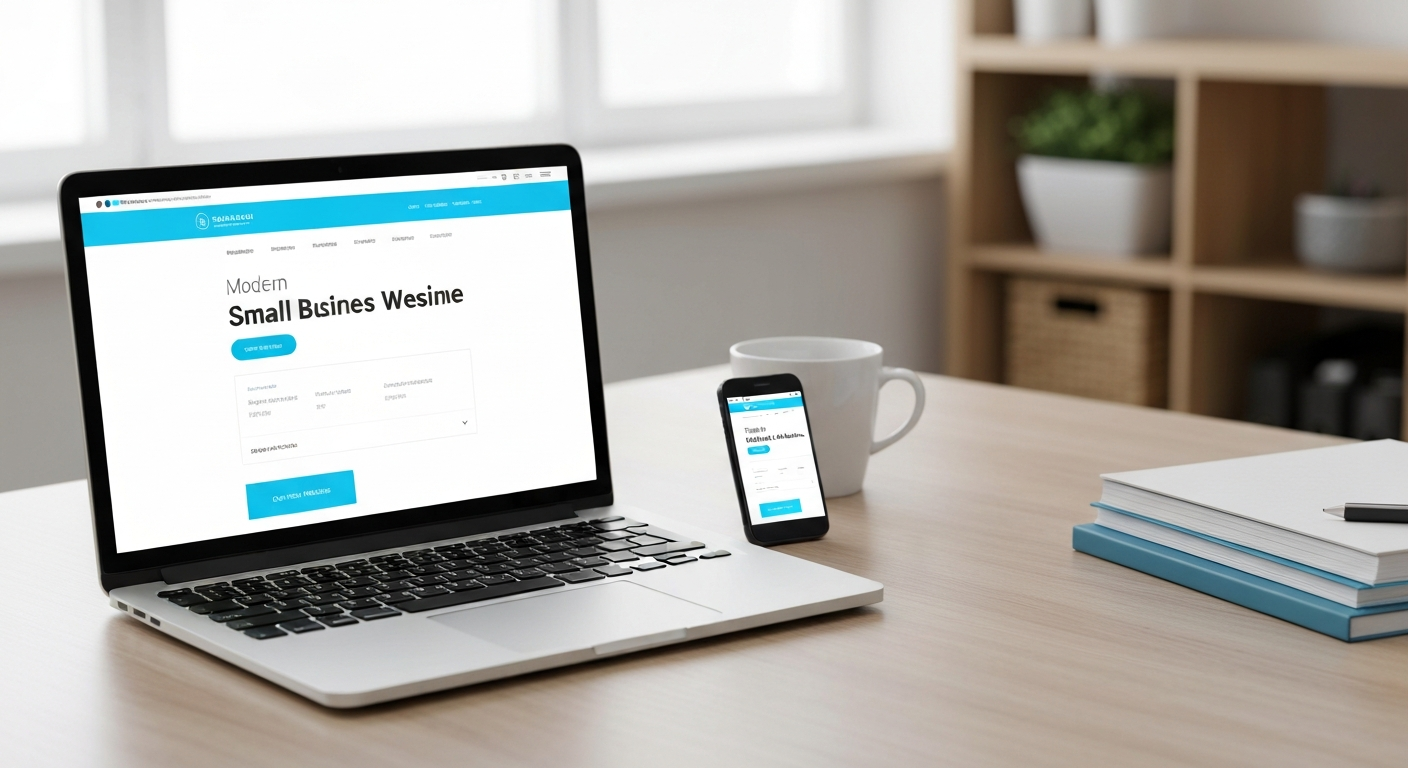
A landing page is a webpage built around one specific goal.
Unlike a homepage, which introduces your entire business, a landing page focuses on one service, one offer, or one action.
Examples include: Book a consultation. Request a quote. Schedule a demo. Download a guide. Contact your business.
Everything on the page supports that single objective.
Why Landing Pages Convert Better
Visitors make decisions quickly. If a page asks them to do too many things, they often do nothing.
Landing pages reduce this problem by providing: One clear message. One primary service. One call to action. Minimal distractions.
The easier you make the decision, the more likely visitors are to act.
Match the Visitor's Intent
Imagine someone searches for: "AI Receptionist for Dentists"
They shouldn't arrive on a generic homepage. They should arrive on a page explaining: AI receptionists for dental practices. Benefits for dentists. How the service works. Why it improves patient experience. How to book a consultation.
Matching the landing page to the visitor's search creates a much smoother experience.
Every Landing Page Needs One Goal
Choose one objective. Examples: Book a meeting. Request pricing. Call now. Complete a contact form. Download a guide.
Avoid giving visitors multiple competing choices. Focus creates action.
What You Can Do Today
Review your most important service page. Ask yourself:
- Does it focus on one service?
- Is the next step obvious?
- Would a first-time visitor know exactly what to do?
If not, you've identified an opportunity to improve conversions.
Use One Primary Call-to-Action
One of the biggest reasons landing pages underperform is because they ask visitors to do too many things.
Imagine arriving on a page that asks you to: Call now. Book a consultation. Download a brochure. Subscribe to a newsletter. Follow on social media. Read the blog.
Most visitors end up doing... nothing.
Instead, choose one primary action. For example: Book a Free Consultation, Request a Quote, Schedule a Demo, or Call Now.
Every section of the page should naturally guide visitors towards that single action.
Remove Unnecessary Distractions
Landing pages work because they simplify decision making. Ask yourself: "Does this element help someone become a customer?" If not, consider removing it.
Common distractions include: Large navigation menus. Too many external links. Multiple offers. Irrelevant content. Pop-ups appearing immediately.
Keep the visitor focused.
Build Trust Quickly
Visitors don't know your business. Before contacting you, they'll usually ask themselves: Can I trust this company? Have they helped businesses like mine? Do they look professional? Will they actually solve my problem?
Answer these questions naturally using trust signals. Examples include: Google Reviews. Customer testimonials. Before-and-after examples. Client logos (with permission). Certifications. Years in business. Number of completed projects.
Trust should appear throughout the page—not just at the bottom.
Write Like You're Having a Conversation
Many landing pages sound like marketing brochures. Instead, imagine explaining your service to a customer sitting across the table.
Use simple language. Avoid unnecessary jargon.
Replace: "We leverage innovative synergistic digital solutions." With: "We help local businesses attract more customers and respond to enquiries faster."
Simple language creates confidence.
Answer Common Questions Before They're Asked
Every visitor has objections. Good landing pages answer them naturally.
Examples include: How much does it cost? How long does it take? Do you work with businesses like mine? What happens next? Is there a contract? Can I speak to someone first?
Addressing these questions reduces hesitation.
Optimise for Mobile First
For many businesses, more than half of website visitors arrive from a mobile phone. Your landing page should feel effortless on a smaller screen.
Check that: Headlines are readable. Buttons are easy to tap. Contact forms are short. Images load quickly. Important information appears early.
A mobile visitor should be able to contact your business in seconds.
Test and Improve
A landing page isn't finished when it's published. Review how people actually use it.
Questions to ask include: Are visitors clicking the call-to-action? Where do they leave the page? Which sections receive the most attention? Are people completing the contact form?
Small improvements over time often produce significant gains.
Common Landing Page Mistakes
- Trying to Sell Everything: Each landing page should focus on one service or campaign. If you offer AI Receptionists, Websites, Local SEO, and Reviews, create separate landing pages for each. Focused pages convert better.
- Weak Headlines: Your headline should immediately answer: "What do you do?" Avoid clever wording if it reduces clarity.
- No Proof: Visitors are naturally sceptical. Show evidence that your business delivers results. Testimonials, reviews, and case studies all help.
- Long Contact Forms: Every extra field creates friction. Only ask for information you genuinely need to begin the conversation.
- Slow Loading Pages: Even the best-designed landing page loses effectiveness if visitors leave before it finishes loading. Speed supports conversions.
Landing Page Checklist
Message & Design
- ✓ One audience, one service, one objective.
- ✓ Clear headline & simple layout.
- ✓ Mobile-first design.
Trust & Conversion
- ✓ Testimonials, Google Reviews & credibility indicators.
- ✓ One CTA & short contact form.
- ✓ Fast loading & regularly reviewed.
Conclusion
A landing page has one purpose: To help the right visitor take the right next step.
When your message is clear, trust is established, and taking action feels effortless, your website becomes far more than an online brochure—it becomes a reliable source of new business.
Instead of trying to appeal to everyone, create focused landing pages that speak directly to the people you want to work with.
Frequently Asked Questions
Ready to transform your business?
Get a custom strategy for AI Receptionists, Local SEO, and Business Automation tailored to your needs.
Contact Dataspec Patrick Reidin today